Playbook · Prospecting
Automated Sales Prospecting: What Breaks and in What Order
 By Marián Cabadaj · Published 10 September 2026 · 10 min read
Automated sales prospecting works until you turn the volume up, and then it fails in a predictable order. Five things break, always roughly the same five, and the order matters because the first one to go is invisible and the last one is the only one anybody rewrites.
The order is the useful part of this. A team whose replies have dried up almost always starts by rewriting the copy, which is the fourth problem at best. The first one is that the list quietly stopped being a list, because somebody loosened the filter to keep the send volume up.
This guide covers what these stacks actually automate, the honest answer on whether it works, the five failure modes in the order they arrive, which platform limits set your real ceiling, the guardrails that have to exist before you add volume, and what has to stay manual. Every requirement and figure comes from Google, The Bridge Group, Salesforce or LinkedIn directly.

What does automated sales prospecting actually automate?
Four steps out of six. Finding accounts, finding the person, verifying the address, and sending on a schedule all automate well. Deciding who is worth writing to automates only if you have written the rule down, and answering a reply does not automate at all.
Sequencing is the easy half
When a vendor says automation they usually mean sequencing: send, wait, send again, stop on reply. That problem was solved a decade ago and it is not where the outcome is decided. Our guide to automated sales maps the same split across the whole sales process, and the conclusion repeats at every stage: automate the research, keep the judgement.
How this differs from the AI question
Whether a tool uses a model is a separate question from whether the pipeline holds at volume. Our guide to AI for sales prospecting covers what the research step can and cannot establish. This page is about the plumbing: what breaks when you push more through it.
Does automated prospecting actually work?
Yes for the research and the sending, no for the targeting and the answering, and that split explains almost every contradictory report you will read about it.

The capacity problem it is sold against is real. Salesforce's State of Sales 2026, a survey of 4,050 sales professionals across 22 countries fielded in August and September 2025, found 48% of reps say they lack the bandwidth for adequate cold outreach while already giving close to a full working day a week to prospecting.
What this means for a B2B sales team: the demand for this is genuine, so the question is never whether to automate. It is which of the six steps, and the two that decide the outcome are the two that resist it.
The same study found 51% of sales leaders say disconnected systems slow their AI initiatives down.
What this means for a B2B sales team: half the field is already carrying an integration problem, which is the fifth failure mode below arriving before anyone has scaled. Adding a tool to a stack with no named system of record makes it worse, not faster.
What breaks first, and why is it always the list?
Because the list is the only part with no error message. Every other failure announces itself eventually. A widened filter looks exactly like a working stack, right up to the point where the reply rate has halved.

| Failure | What you see | What actually happened |
|---|---|---|
| The list stops being a list | Reply rate drifts down while send volume holds steady | The filter was loosened to keep the volume up, so fit quietly widened |
| Bounces climb | A few percent of sends fail, then more | Verification was turned off to save credits, or the data aged |
| Deliverability goes quiet | Opens and replies fall together with no error anywhere | Spam complaints crossed the threshold and filtering began |
| Replies go unanswered | Positive replies sit for days and the thread dies | Sending scaled and answering did not, because answering is manual |
| The CRM stops matching reality | Nobody trusts the pipeline report | Two tools write the same record and neither is the source of truth |
Why the order gets inverted in practice
Teams debug in order of visibility, and the order of visibility is the reverse of the order of cause. Copy is the most visible thing in the stack and the least likely culprit. The list is the least visible and the most likely. Debug in the order of the table, from the top.
Field note: the first time I watched a domain go quiet we spent two weeks on subject lines. The bounce rate had been climbing for a month because somebody had switched verification off before quarter end to save credits. Nothing in the sequencing tool mentioned it, and the dashboard we did have was showing sends, which were fine.
Which platform limits decide your real ceiling?
Two, and only one of them is a number you can look up. The other is a policy question that gets accounts restricted rather than rate limited.
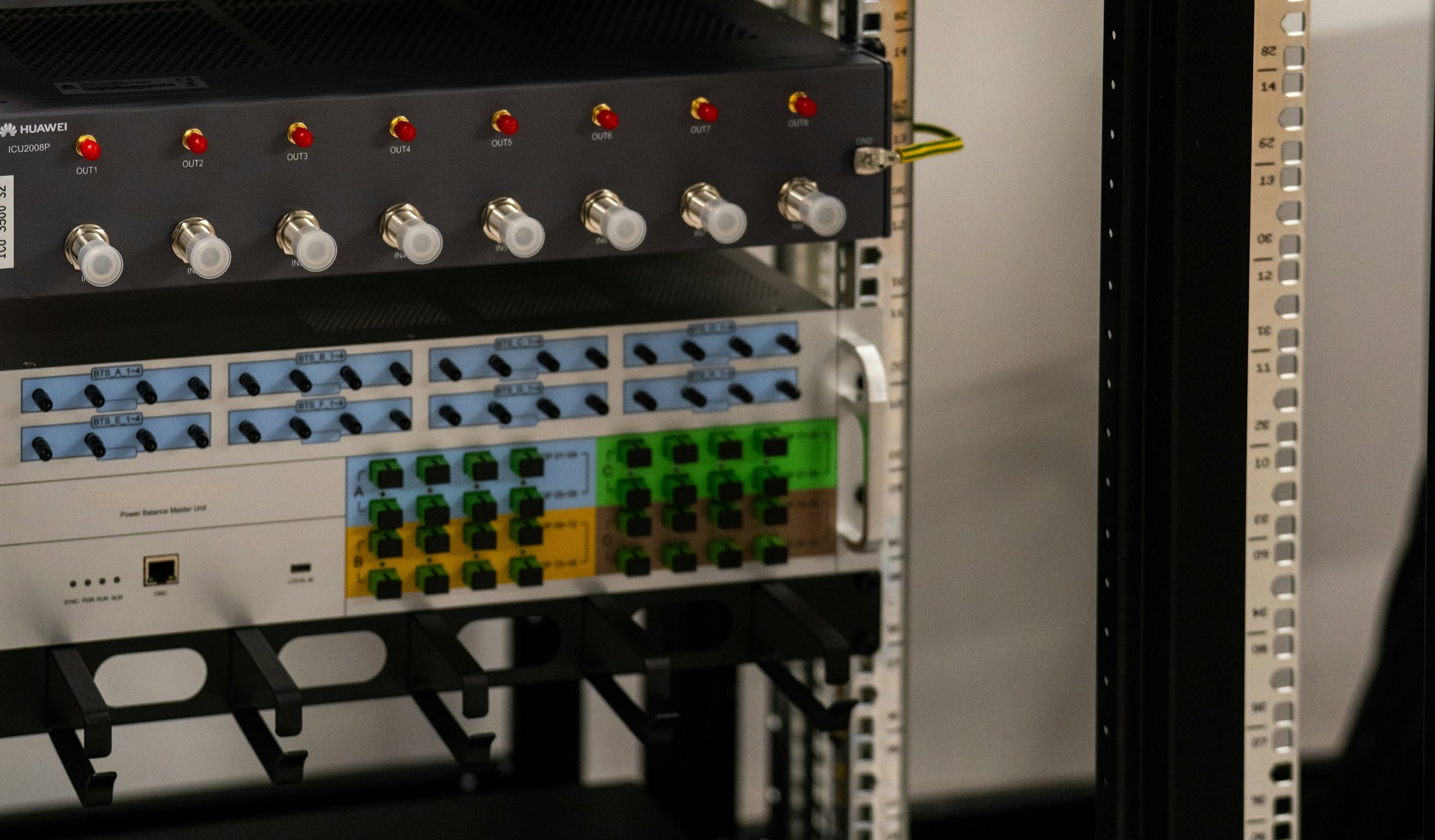
Email: the threshold is published
Google's email sender guidelines treat 5,000 or more messages a day to Gmail accounts as bulk sending, which brings SPF, DKIM and DMARC requirements with it, and ask senders to keep the spam rate reported in Postmaster Tools below 0.30%.
What this means for a B2B sales team: 0.30% is three complaints in a thousand, which is a smaller allowance than most people picture. It is also the number that makes targeting a deliverability control rather than a marketing preference. Our deliverability checklist covers the DNS side in full.
LinkedIn: the limit is not a number
LinkedIn does not publish a weekly connection request limit, and every specific figure in circulation is an operator estimate rather than a published rule. What the user agreement does address is automation itself, which makes the real exposure account restriction rather than a rate you can safely sit under. Our notes on what LinkedIn actually allows go through the terms.
Which guardrails have to exist before you add volume?
The ones that make each failure mode visible. None of them is expensive, and all of them are much cheaper before the incident than after.
An alert on list size, not just on sends
If the qualified list jumps by half in a week, somebody loosened something. That alert catches the first and least visible failure mode, and almost nobody has it.
Verification at send time
Data ages between import and send, and the gap is where bounce rate comes from. Verifying at the point of sending costs slightly more in credits and removes an entire failure class.
A daily look at the spam rate
A bad week costs you the following one too, so this is not a monthly review item. Somebody has to own it daily, and at most teams that somebody is nobody.
What does a minimal stack look like?
Four jobs, and it matters much less which vendor does each than that exactly one system is the source of truth for the record.

The four jobs
Something to find accounts and attach a reason. Something to find and verify the person. Something to send and space the follow-ups. Something to hold the record. Which vendor fills each slot matters far less than the fact that the four jobs are distinct and one system owns the record.
Name the system of record first
The fifth failure mode is the only one on the list that cannot be fixed later without a migration. Decide which system owns the record before you connect the second tool, and write it down where the next person will find it.
Field note: I have seen this cost a quarter's forecast twice, both times the same way. Two tools were each allowed to create a contact, neither deduplicated against the other, and the pipeline report double counted a whole segment. Nobody spotted it until a board deck asked for a number that could be checked by hand.
What has to stay manual?
The offer and the answer. Both for the same reason: neither can be stated as a rule in advance.
The offer
What you are proposing, and why it is worth a reply, is the one part of the message with no template. A tool can vary the wording around it and cannot generate the substance.
The answer
A reply is a person choosing to spend attention on you, and automating the response is how that gets spent for nothing. This is also the fourth failure mode: sending scales and answering does not, so the leads that were working are the ones that rot.
Which numbers tell you it is working?
Four, and one of them is not a performance metric at all.

Spam rate, checked daily
The one that is not a performance metric. It is a survival metric, and it has a published ceiling of 0.30%.
Positive reply rate, never reply rate
Volume inflates replies of every kind, including the ones asking you to stop. Splitting positive from total is what keeps a rising number honest, and it is the only reply metric worth putting on a wall.
Conversations per rep, against the published ceiling
The Bridge Group's 2025 SDR study of 351 B2B companies puts the median SDR at 112 activities a day producing 4.1 quality conversations, against a median Stage 0 quota of 10 meetings a month that has fallen 40% since 2018.
What this means for a B2B sales team: roughly 27 touches buy one conversation, and 4.1 a day is where a person saturates. Automation gives you a better-chosen 112, not a larger number, so any plan that turns saved hours into volume is aiming at a ceiling that does not move.
That study also records quota attainment at 60%, which it notes is the lowest in the history of the series.
What this means for a B2B sales team: the worst attainment on record has arrived in the years these stacks became standard. Automating volume first is what produced it, and the filter is where the next hour belongs.
The target itself has moved too: the median Stage 0 quota of 10 meetings a month is 40% lower than it was in 2018.
What this means for a B2B sales team: the industry has already cut the number in half and still misses it. Plan your capacity from the 4.1 conversations rather than from what the tool says it can send.
Bounce rate, as a proxy for honesty
It tells you whether verification is still on. That is worth a chart of its own, because switching it off saves money visibly and costs reputation invisibly.
What order should you build it in?
Guardrails before volume, every time. This order exists so that each failure mode is visible before it can happen.
1. Authentication, before a single send
SPF, DKIM and DMARC. Below the bulk threshold weak authentication is survivable; above it, delivery depends on it.
2. A named system of record, before the second tool
The only failure on the list that needs a migration to fix later.
3. A written ICP, before the volume
This is what makes the first failure mode detectable at all. Our guide to lead qualification covers writing the rule so software can apply it.
4. Volume last, capped by reply capacity
Set the daily number from the replies one person can answer, then check it against the 5,000 threshold. Not the other way round.
The failure modes at a glance
The same five, with what each one costs and the guardrail that makes it visible.
| Failure | What it costs | The guardrail |
|---|---|---|
| The list stops being a list | Every downstream number, invisibly | A written ICP the tool applies, and an alert when list size jumps |
| Bounces climb | Domain reputation, which takes weeks to rebuild | Verify at send time, not at import time |
| Deliverability goes quiet | The domain, sometimes permanently | Watch Postmaster Tools daily, not at quarter end |
| Replies go unanswered | The only leads that were working | Cap daily sends at the replies one person can answer |
| The CRM stops matching reality | Every forecast built on it | Name one system of record before adding the second tool |
How Leadalf fits an automated stack
Leadalf sits on the first failure mode, which is the one with no error message. It does not replace your sequencer and it does not hold your records.
The differentiated point is this: in an automated stack, volume is a consequence and not a setting. Every dial in these tools invites you to type a number, and the number that is actually available is decided by how many people are worth writing to this week and how many replies one person can answer. Type a bigger number and the stack degrades through the five modes above in order.
What the workflow looks like
It maintains the part that silently widens, and leaves the rest of the stack alone.
- Signals in: it watches LinkedIn, Reddit, X, the Meta Ads Library and job postings, so the list is bounded by events that happened rather than by a filter somebody can loosen.
- Scored against your ICP, not a keyword: each signal is scored against the ICP you wrote down, which is the guardrail on failure mode one.
- Delivered with the reason attached: the people behind passing signals are enriched and pushed into Instantly or HeyReach carrying the reason they qualified.
See how the signal sourcing works end to end, or what a filtered lead costs in credits.
It does not write your offer and it does not answer your replies. Those are the two steps this page marks manual, and they stay that way on purpose.
FAQ
Does automated sales prospecting actually work?
The research and the sending work well. The targeting and the answering do not automate, and those are the two that decide the result. Teams that report it working have usually automated list building and sequencing while keeping a person on the offer and the replies. Teams that report it failing have usually automated the sending and left the targeting to whatever was easy to export, which produces well-timed messages to people who were never going to buy.
How many emails a day can an automated prospecting stack send?
Set it from your reply capacity, then check it against the sender rules. Google treats 5,000 or more messages a day to Gmail accounts as bulk sending, which brings SPF, DKIM and DMARC requirements with it, and asks senders to keep spam rates in Postmaster Tools below 0.30%. Most teams hit their reply ceiling long before the volume threshold, which is the limit that should actually set the number.
How many LinkedIn connection requests can be automated per week?
LinkedIn does not publish a numeric weekly limit, and any specific figure you see quoted is an operator estimate rather than a published rule. What the user agreement does address is automation itself, so the risk of an automated LinkedIn stack is account restriction rather than a rate limit you can safely sit under. Treat the platform as the constraint and read the terms before you scale it.
What should I automate first?
Whichever step you can write the rule for. If you can state who is worth writing to as a sentence, software can apply that at a volume no rep can match, and that is the step with the largest effect. If you cannot state it, automating it applies your vagueness at scale. Sequencing is the easiest step to automate and it moves the outcome least, because it was solved a decade ago.
Why did replies drop after we increased volume?
Check the spam rate before you touch the copy. Copy is what teams rewrite first because it is what they can see, but a filtered message does not have a copy problem. Check bounce rate next, then whether the list widened to feed the new volume. Copy is the fourth thing to look at, and it is almost never the cause when the fall coincided with a volume increase.