Playbook · AI in sales
AI Agents for Sales: What They Do Well and Where They Break
 By Marián Cabadaj · Published 4 September 2026 · 11 min read

An AI agent for sales is software that picks its own steps to reach a sales outcome. It reads, decides what to look at next, uses a tool, and repeats until it has an answer. That is a real and useful thing. Most products carrying the label do something simpler, and the gap between the two is where the money goes missing.
Nearly every team I have watched buy one made the same purchase: an agent for a step that was already a fixed path. Verifying an email address takes one API call and the discipline to drop what fails. Wrapping that in an agent makes a solved step slower, more expensive and occasionally wrong, and the demo never shows it, because the demo runs once.
What is an AI agent for sales, and what is only a workflow?
The clearest definition does not come from a sales vendor. Anthropic, in Building effective agents, splits the category in two. Workflows are systems where models and tools are orchestrated through predefined code paths. Agents are systems where models dynamically direct their own processes and tool usage, keeping control over how they accomplish a task. Both are useful. They are not interchangeable, and they do not cost the same.
The same guidance says when to reach for an agent: open-ended problems where you cannot predict the number of steps. So read the vendor demo again and ask which half you are being sold. If the flow is the same every time, you are buying a workflow with a model inside it, and you should price it like one.
What the distinction costs you
A workflow fails predictably. It breaks the same way every time, you find it once, and you fix it once. An agent fails differently on each run, which is the price of letting it choose. On an open-ended job that price is worth paying. On a fixed path it is pure downside: you pay more per run and you inherit a failure mode you did not have before. Our guide to automated sales draws the same split across the whole process.
What an agent needs that a workflow does not
The same guidance is blunt about the requirement most sales deployments skip: the agent has to gain ground truth from the environment at each step, such as a tool result, so it can assess its own progress. A sales agent with no ground truth is a confident narrator. It will tell you it researched twelve accounts, and nothing says whether the twelve summaries are true.
Which sales jobs can an agent actually run today?
Break the motion into jobs and the argument stops being about taste. Ask two questions per job. Can you write the steps down in advance? If yes, it is a workflow. If no, can a wrong answer be caught cheaply before it reaches a buyer? If yes, it is an agent. If no, it stays with a person. That second question is what our guide to AI for sales prospecting works through for the research stage specifically, where a claim is either checkable or it is a guess.
| Job | Verdict | Why |
|---|---|---|
| Deciding which accounts are worth approaching | Agent | The number of steps is unknowable in advance, which is the case for an agent rather than a fixed path. |
| Finding a reason to reach out this week | Agent | Hiring posts, funding rounds and new ad creative are all readable. Which one matters needs judgement per account. |
| Finding and verifying the person | Workflow | Title matching plus an address check is a fixed path. An agent here buys variance you did not want. |
| Researching an account before a call | Agent | Open-ended by definition. You cannot hardcode how many pages it takes to learn how a company makes money. |
| Drafting the opening line | Assist | Software supplies the fact. A person decides whether the fact is worth opening with, and that judgement is the product. |
| Sending and sequencing | Workflow | Send, wait, send again, stop on reply. A fixed path for a decade, and it should stay one. |
| Classifying and routing a reply | Assist | Classification is reliable. Deciding what to say back to a hesitant buyer is not, and a wrong answer is expensive. |
| Qualifying, negotiating and closing | Human | The buyer is deciding whether to trust you. Nothing about that improves when the other side is software. |
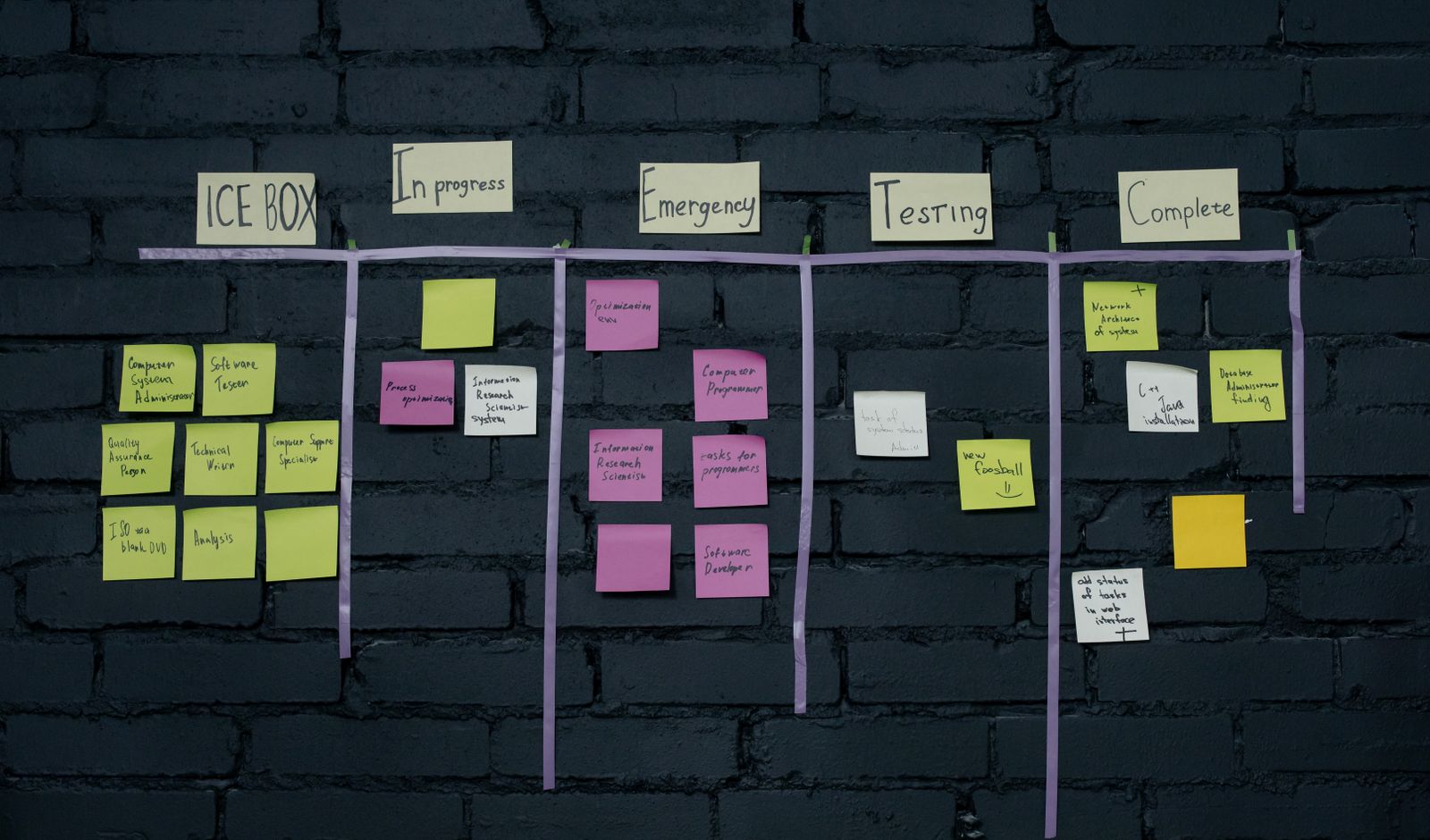
Where an agent earns its cost, and where it never will
The three agent rows are open-ended, are read by a person before anything is sent, and are done badly today because nobody has the hours. Start with pre-call research: a bad run costs a rep two minutes of reading. The workflow rows were never agent-shaped, and our breakdown of outbound email automation walks those steps one by one. The tooling already exists and is boring, which is a compliment.
Field note: the first agent deployment I watched fail did so quietly. It was pointed at contact lookup, a step the previous tool had done deterministically. It found the right person about nine times in ten, which nobody noticed, because nobody was checking a step that had never been wrong before. We found it a month later from a bounce rate.
Where do AI agents for sales break?
Four ways, ordered by how long each takes to notice rather than by how loudly it fails. The loud ones are fine. You find those on day one.
| Failure | What it looks like | The fix |
|---|---|---|
| No ground truth | The agent reports it finished. Nobody can say whether the step worked. | Give every step a checkable result: a row written, an address verified, a link that resolves |
| Autonomy on a fixed path | A lookup that was one API call now takes six model turns, and sometimes picks the wrong person. | Move the step back to a workflow, and keep the agent for the open-ended half |
| The channel does not care | Volume ramps, then replies stop. Or the LinkedIn account is restricted. | Read the provider rules before the ramp, and keep sending inside them |
| Judgement laundering | The output reads confident and sourced, so nobody checks it, and the reason it gave was invented. | Show the source next to the claim, and make approving and rejecting one click each |
Judgement laundering is the expensive one
The other three are engineering problems. This one is a people problem, and it is why a bad deployment survives a quarter. Model output arrives fluent and sourced-looking, so a rep reads it as research rather than as a draft.
The teams getting value from these tools check their inputs. In Salesforce's State of Sales 2026, which surveyed 4,050 sales professionals across 22 countries, 79% of top performers prioritise data hygiene against 54% of underperformers.
What this means for a B2B sales team: the gap between those two groups is 25 points on a habit that costs nothing to adopt. Before you add an agent, make it possible for a rep to see the source next to the claim in one glance. Without that, you have automated the production of plausible sentences.

What do the adoption numbers actually say?
Two primary datasets point in opposite directions, and the disagreement is the most useful thing here.
The optimistic half
Salesforce's State of Sales 2026, fielded across August and September 2025, reports that 54% of sellers have used agents, with nearly nine in ten planning to by 2027, and that 92% of sellers with agents say it benefits their prospecting. Top performers are 1.7 times more likely than others to use prospecting agents.
What this means for a B2B sales team: the 1.7 times figure is the one to act on, and note the direction of the claim. It says good reps reach for these tools, not that the tools made them good. Give your best rep the agent first and copy what they do with it.
The half that should slow you down
Gartner, in a press release of 28 July 2026, predicts that AI agents will outnumber sellers 10 to 1 by 2028, and in the same headline that fewer than 40% of sellers will say agents improved their productivity. Plan for being in that majority and design against it. The teams in the minority will be the ones who put agents on open-ended work and left the fixed paths alone.
Why the bandwidth number is the honest case
Back in the Salesforce survey, 48% of sales professionals lack the bandwidth to do adequate cold outreach, and the average seller spends 40% of their time actually selling. That is the argument for an agent, and it is a modest one: the research half of the week is not being done, and an agent can do it.
What this means for a B2B sales team: if your reps are at 40% selling time, point the agent at the list rather than at the send volume. The same number of sends off a list somebody thought about beats more sends off an export. Our guide to the SDR role covers where those hours currently go.

What rules apply once an agent starts sending?
All of them, unchanged. No provider has a lighter set of rules for automated senders, and two have written theirs down in a way worth reading before you ramp anything.
Email: the thresholds are published
Google's Gmail email sender guidelines judge anyone sending more than 5,000 messages a day to Gmail accounts as a bulk sender. Above that line, SPF, DKIM and DMARC are a condition of delivery, and the Postmaster Tools spam rate has to stay below 0.30%.
What this means for a B2B sales team: 5,000 a day is easy to cross by accident the moment an agent is choosing the volume. Cap the send rate in the sending tool, not in the agent's instructions, because a cap the agent can reason its way around is not a cap.
LinkedIn: automated sending is prohibited, not discouraged
This is the one people get wrong most expensively. Clause 8.2.13 of the LinkedIn User Agreement prohibits using bots or other unauthorized automated methods to access the service, add or download contacts, send or redirect messages, or drive inauthentic engagement. An agent that holds a session cookie and sends on its own is squarely inside that clause, and getting caught costs you the account plus every relationship in it. Read signals on LinkedIn, and send as a human.

Which numbers tell you it is working?
Four, and only the first is specific to agents. The other three catch an agent quietly making things worse.
Override rate, first
The share of agent output a human rejects or rewrites. Nobody publishes a benchmark for this, and I am not going to invent one. Its value is as a trend on your own team: falling means you can widen the agent's scope, rising means the targeting drifted.
Reply rate per approved message
Count replies against the messages a human approved, because that is the volume you can sustain. A reply rate measured per send flatters any tool that increased sends.
Cost per qualified conversation
Agents move cost around rather than removing it. Model spend goes up, rep hours go down, and only a per-conversation number says which way the trade went. Our guide to SaaS software sales covers the funnel metrics around it.
Spam rate in Postmaster Tools
Below 0.30%, checked weekly, and checked before anyone rewrites a subject line. A filtered message does not have a copy problem.
Field note: the clearest result I have seen from a sales agent was a rep going from three hours of pre-call research a week to twenty minutes of reading briefs, and putting the difference into the conversations they already had booked. The reply rate did not move at all. Close rate did.
What order should you add agents in?
Five steps, in this order. Every one makes the next cheaper, and skipping the first makes the four that follow unmeasurable.
- Write the ICP down as rules. An agent cannot discover your ICP. It applies the one you wrote, or the vagueness you left.
- Point the first agent at research, never at sending. A wrong run costs a rep two minutes.
- Put a one-click approval on anything that reaches a buyer, with the source visible next to the claim.
- Only then automate the send, as a workflow. Capped rate, suppression enforced outside the agent.
- Widen scope on the override rate. One job at a time, once the last job's rate has fallen for a month.
How Leadalf runs AI agents for sales
Knowing the split is not the hard part. The gap is operational: nobody has the hours to research a hundred accounts a week, so the list quietly becomes whatever was easy to export.
The differentiated point is this: an agent is worth its variance only where the work has no fixed path, and in outbound that is the list. Sending is deterministic. Deciding who belongs on the list is unbounded research that changes every week. So Leadalf puts the reasoning at the top of the funnel and leaves the sending to the tool you already run.
- Signals in: it watches LinkedIn, Reddit, X, the Meta Ads Library and job postings for buying signals, so a list starts from something that happened rather than from a filter on company size.
- Scored against your ICP, not a keyword: each signal is scored against the ICP you wrote down, which is what stops a keyword match from becoming a send.
- Enriched, then delivered with the reason attached: the people behind the signals that pass are enriched and pushed into Instantly or HeyReach, carrying the reason they qualified.
The reason travelling with the lead is the source next to the claim, which is what a rep needs to approve an opening line in one click. See how the signal sourcing works end to end, or what a filtered lead costs in credits. It does not decide your offer and it does not close your deals. That is the row the table marks human.
FAQ
What is an AI agent for sales?
It is software that decides its own steps to reach a sales outcome, rather than following a path you wrote in advance. Anthropic draws the line clearly: a workflow orchestrates models and tools through predefined code paths, while an agent lets the model direct its own process and tool use. Account research is open-ended, so it suits an agent. Verifying an address is a fixed path, so it suits a workflow.
Can an AI agent replace an SDR?
It can replace most of what an SDR spends the week on, and none of what an SDR is hired for. Salesforce found the average seller spends 40% of their time actually selling, and sellers with agents expect prospect research to drop by 34%. The qualifying conversation, where a buyer decides whether to trust you, is the other half, and no published evidence says software improves it.
Are AI agents allowed to send LinkedIn messages?
Not under LinkedIn's own rules. Clause 8.2.13 of the User Agreement prohibits using bots or other unauthorized automated methods to access the service, add or download contacts, send or redirect messages, or drive inauthentic engagement. An agent that logs in and sends on its own is exactly that. Read signals on LinkedIn, send as a human, and keep automated volume in channels whose rules permit it.
Do AI agents hurt email deliverability?
The volume and the targeting do. Mailbox providers do not measure whether a message was written by a person. Google judges anyone sending more than 5,000 messages a day to Gmail accounts as a bulk sender, requires SPF, DKIM and DMARC, and asks that the Postmaster Tools spam rate stays below 0.30%. An agent makes that line easy to cross in a week.
How do I tell whether a sales agent is working?
Watch the override rate before the reply rate. It is the share of agent output a human rejects or rewrites, and the only number that says whether the agent is doing the judgement it claims. Falling means you can widen its scope. Rising means the targeting drifted. Reply rate per approved message, cost per qualified conversation and the spam rate follow.