Playbook · Sales process
Sales Process Optimization: Find the Stage That Leaks
 By Marián Cabadaj · Published 13 September 2026 · 9 min read
Sales process optimization is finding the stage where your pipeline leaks and fixing that one. Not redesigning the funnel, not buying a tool, and not running a workshop about the funnel.
The reason it rarely works is an ordering mistake that looks like rigour. A team measures every stage, finds the biggest drop, and fixes it there. But the biggest drop is usually caused by something that went wrong two stages earlier, so fixing it where it shows up treats the symptom and the number comes back next quarter.
This guide covers what optimization actually means here, how to measure a stage so the number means something, how to find the leak that is causing the others, why the data problem comes before the process problem, the handoff nobody owns, what is safe to automate, and how to prove a change worked. Every figure comes from Salesforce, The Bridge Group or TrustRadius directly.

What does sales process optimization actually mean?
It means raising the conversion rate between two named stages, deliberately, and being able to say afterwards which change did it. Everything that does not fit that sentence is reorganisation with a better name.
Redesign and optimization are different jobs
A redesign changes the stages. An optimization leaves them alone and changes what happens inside one. Redesign is occasionally right and almost always premature, because a team that cannot yet say which stage leaks has no evidence that the stages are the problem.
One change at a time, even though it feels slow
Three changes in one quarter produce one number and no knowledge. The temptation is real, because a quarter is short and the list of suspected problems is long. The teams that compound are the ones that spend a year learning five things rather than a year changing fifteen and learning none.
How do you measure a stage so the number means something?
Against itself over time, and against your own best segment. Not against a published benchmark, which averages markets that share nothing except a label.

A stage that converted at 22% last quarter and 12% this one is broken. A stage that has always converted at 12% may simply be where your market says no, which is information rather than a defect, and optimizing it is a year spent arguing with the market.
TrustRadius's 2026 B2B Buying Disconnect, a January 2026 survey of 1,862 technology buyers and 444 vendors, found that 83% of buyers shortlisted three or fewer products.
What this means for a B2B sales team: a low late-stage conversion rate is often correct rather than broken. If four vendors chase three slots, one loses on arithmetic, not execution. The stage worth optimizing is the one that decides whether you are in the three, and that is earlier than most teams look.
How do you find the leak that is causing the others?
Start at the earliest stage that leaks rather than the largest drop. Those are usually different stages, and the difference is the whole argument of this page.

| Stage | The tell | What is usually behind it | What to change |
|---|---|---|---|
| List to contacted | Reps skip accounts the system assigned them | The list is wrong and everyone below rep level knows it | Fix targeting. Nothing downstream is worth touching yet |
| Contacted to replied | Step 1 replies fine, later steps flatline | The sequence ran out of reasons before it ran out of steps | Shorten it, or give each step its own reason |
| Replied to meeting held | Plenty of replies, few meetings, high no-show | The ask is wrong, or the reply was polite rather than real | Change the ask. Confirm meetings the day before |
| Meeting to opportunity | Good calls, nothing enters the pipeline | Discovery produced interest and never produced a cost | Add an exit test to the stage, not more calls |
| Opportunity to closed | Deals age out in commit rather than losing | A buyer was missing from the map the whole time | Map the buying group earlier, and disqualify sooner |
Field note: the fastest diagnostic I know costs nothing. Look at whether reps quietly skip accounts the system assigned them. Reps are the cheapest quality signal in the building and they vote with their time long before anyone runs an analysis. A skipped-account rate above a fifth is a targeting problem being reported informally.
Salesforce's State of Sales 2026, a survey of 4,050 sales professionals across 22 countries fielded in August and September 2025, puts the average seller at 40% of their time actually selling, with the rest going to admin, research and internal work.
What this means for a B2B sales team: the largest available optimization is usually not a conversion rate at all. It is the 60% of the week that is not selling. A change that returns four hours to every rep beats a two-point conversion improvement in almost every model you can build.
Why does the data problem come first?
Because every stage number is computed from CRM records, and a process measured on optimistic records is optimized against fiction. This is the step teams skip, because it is the least interesting work available.
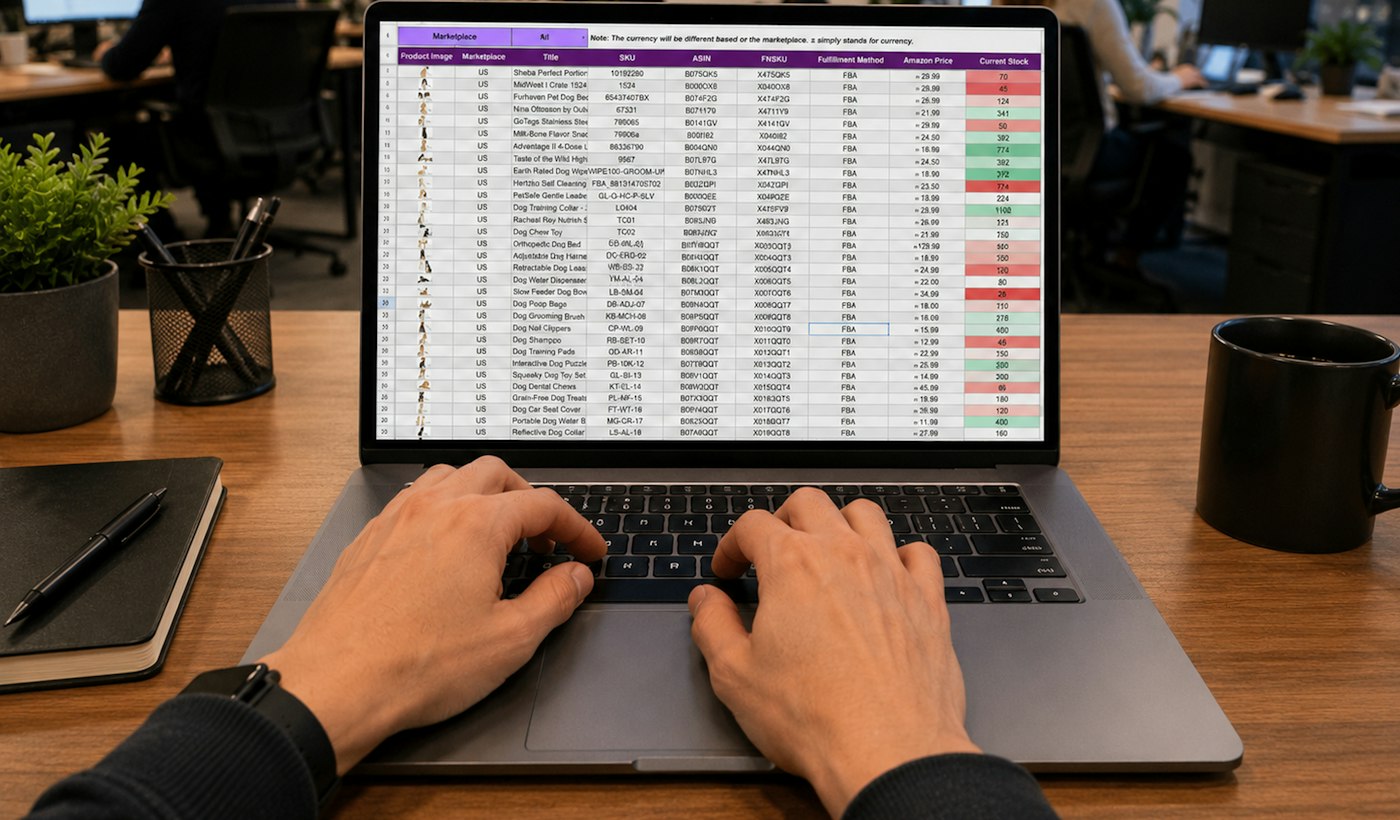
The same State of Sales 2026 research reports that 74% of sales professionals are working on data cleansing, and that 79% of top performers prioritise data hygiene against 54% of underperformers.
What this means for a B2B sales team: the hygiene gap between top and bottom performers is 25 points, which is larger than most conversion gaps anyone is trying to close. Before optimizing a stage, confirm the stage is entered honestly. A deal that sits in commit because moving it back is awkward makes every number after it wrong.
The specific failure to look for is stage inflation: deals entering a stage before its exit test has been met, because the stage name sounds better on a pipeline review. Our guide to lead scoring covers how to make the entry test something a machine can apply, which is the only version that survives a bad quarter.
Which stage does nobody own?
The handoff, and it is where the largest unmanaged loss usually sits. Two people each believe the other has it, and the deal waits in between.

A handoff needs three things written down: what has to be true for it to happen, who is accountable during it, and how long it is allowed to take. Most teams have the first, occasionally. Almost none have the third, which is why the honest answer to how long a handoff takes is nobody measured it.
The Bridge Group's 2025 SDR Models, Motions and Metrics study of 351 B2B companies staffed roughly one SDR for every 2.4 Account Executives, a ratio that has held since 2018.
What this means for a B2B sales team: one handoff in every deal crosses that boundary, and the ratio means a single SDR is handing to more than two people with different habits. Standardising what crosses the line matters more than the ratio itself, and it is the cheaper of the two to change. Our guide to lead qualification covers what the handoff test should contain.
What is safe to automate?
Only a stage that already works. Automation multiplies what a stage currently does, including doing it wrong, and at a volume that makes the damage harder to see.

The rule worth holding is that automation is a multiplier and never a repair. If a stage converts badly by hand, it converts badly at scale, and the scale removes the feedback that would have told you. Our guide to outbound email automation covers which parts of a sequence can run unattended and which cannot.
Salesforce's same research found 48% of reps say they lack the bandwidth for adequate cold outreach while already giving close to a full working day a week to prospecting.
What this means for a B2B sales team: automate the research and the list building, which is where that day goes, before automating the sending, which is where the damage happens. Most teams do it in the opposite order because sending is the part with an obvious product attached.
How do you prove an optimization worked?
One change, one full sales cycle, and a number chosen before the change rather than after. The last part is where most of the self-deception lives.

The Bridge Group's same study puts pipeline per SDR at $3.78M, up sharply from $2.83M, while quota attainment sits at 60%, the lowest on record.
What this means for a B2B sales team: pipeline volume rose while attainment fell, so volume is no longer evidence that anything improved. Pick a conversion rate or a cycle time as the success measure, never a total, because a total goes up when the team simply works harder and tells you nothing about the process.
Field note: the failure I see most is reading a change at two weeks, seeing noise, and reverting it. The second most common is changing three things in one quarter, which produces one number and nothing you can attribute. Both feel like urgency and both cost a year.
Price the change before you make it. A conversion rate is only worth what the pipeline behind it costs to build, and that is the arithmetic most optimization proposals skip.
The optimization order at a glance
The same five leaks, sorted by what it costs to fix each one.
| Stage | What to change | Cost to fix |
|---|---|---|
| List to contacted | Fix targeting. Nothing downstream is worth touching yet | Low |
| Contacted to replied | Shorten it, or give each step its own reason | Low |
| Replied to meeting held | Change the ask. Confirm meetings the day before | Low |
| Meeting to opportunity | Add an exit test to the stage, not more calls | Medium |
| Opportunity to closed | Map the buying group earlier, and disqualify sooner | High |
How Leadalf runs process work
Every stage above is measured downstream of one decision that is almost never treated as a stage: who went on the list. That decision sets the ceiling for every conversion rate after it.
The differentiated point is this: targeting is a process stage, and it is the only one with no conversion rate. Because nothing is measured there, it never appears in an optimization review, so teams optimize the five stages below it and treat the ceiling as a fact about their market. The skipped-account rate is the closest thing to a conversion rate that stage has, and almost nobody instruments it.
What the workflow looks like
Leadalf works on the stage above the funnel.
- Signals in: it watches LinkedIn, Reddit, X, the Meta Ads Library and job postings, so an account enters the process because something happened rather than because it matched a filter.
- Scored against your ICP, not a keyword: each signal is scored against the ICP boundary, which raises the ceiling on every stage underneath instead of moving one rate.
- Delivered with the reason attached: the people behind passing signals are enriched and pushed into Instantly or HeyReach carrying the reason they qualified, so the first stage starts with something true in it.
See how the signal sourcing works end to end, or what a filtered lead costs in credits.
It does not redesign your stages and it does not fix your CRM hygiene. Those need your own history and your own managers, and no vendor can supply either.
FAQ
Where do you start optimizing a sales process?
At the earliest stage that leaks, not the biggest drop. Those are usually different, because a large fall late in the funnel is often caused by something that went wrong at the top, and fixing it where it shows up treats the symptom. The cheapest test is to look at whether reps quietly skip accounts the system assigns them. If they do, the targeting is wrong and no amount of work further down will survive it.
How do you know a stage is actually broken rather than just hard?
Compare it against itself over time, and against your own best segment, rather than against a published benchmark. A stage that converted at 22% last quarter and 12% this one is broken. A stage that has always converted at 12% may just be the stage where your market says no, which is information rather than a defect. Industry benchmarks are the weakest comparison available, because they average markets that share nothing but a label.
Should you optimize the process or the list first?
The list, almost always, and it is the least popular answer. Process work is visible, feels like management and produces artefacts. Targeting work produces nothing anyone can present. But a process is a multiplier, and a multiplier on a list of people with no reason to care produces more noise faster. The order that works is targeting, then the earliest leaking stage, then everything else.
How long should you wait before judging a change?
One full sales cycle, and for anything past the meeting stage, a cycle plus a quarter. The common mistake is reading a change at two weeks, seeing noise, and reverting. The second common mistake is changing three things at once so that nothing can be attributed. Change one stage at a time and let it run, even though that feels slow, because the alternative is a year of changes you cannot learn anything from.
Does automating a stage optimize it?
Only if the stage already works. Automation multiplies whatever the stage currently does, including doing it wrong, and it does so at a volume that makes the damage harder to see. The rule worth holding is that you automate a stage you have already measured and fixed, never one you are hoping to fix by automating. Our guide to outbound email automation covers which parts of a sequence can safely run unattended.